
A Century Of Smokey Tunes
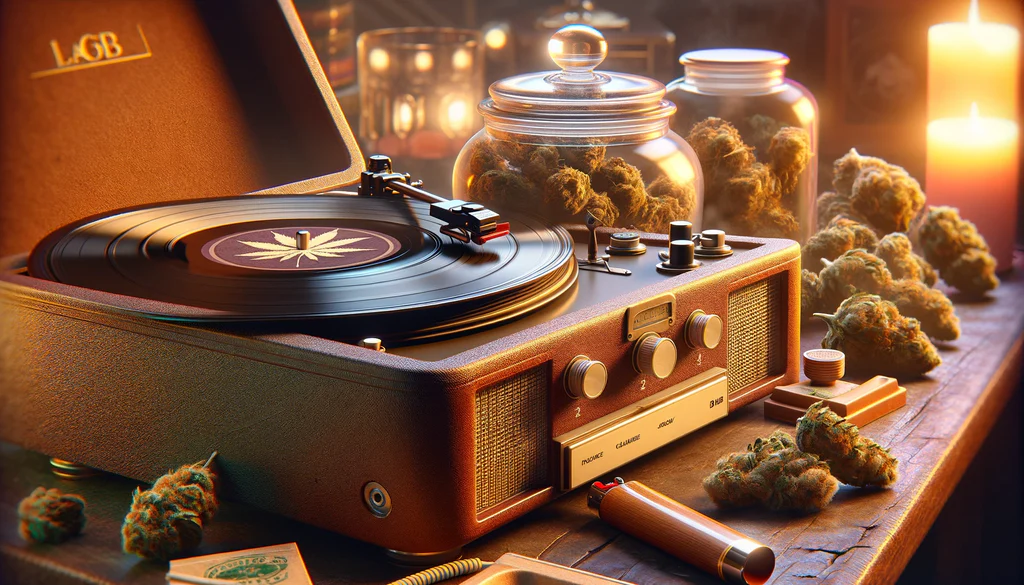
Below Is a FREE TO DOWNLOAD short audio about the history of cannabis music.
The History of Cannabis in Music.
Written by Casper Leitch
When we talk about the history of modern music, we often focus on instruments, technology, or the great cultural movements that shaped the sound of each generation. But there’s another influence - quiet, controversial, and persistent - that has threaded itself through the last hundred years of musical evolution. That influence is cannabis. And whether whispered about in smoky jazz clubs or shouted from festival stages, cannabis has shaped how musicians create, how audiences listen, and how entire genres define themselves.
To understand this relationship, we have to go back to the early 20th century, when jazz was still young and America was learning how to dance to a new rhythm. In the 1920s and 1930s, cannabis, (then called “gauge” by Black jazz musicians) was already part of the creative ecosystem. Louis Armstrong, one of the most influential musicians of all time, spoke openly about his lifelong use of cannabis. He said it helped him relax, helped him connect, and helped him play. Armstrong wasn’t alone.
Duke Ellington, Cab Calloway, and Fats Waller all moved through a world where cannabis was passed around during jam sessions the way sheet music might be passed around in a conservatory. It wasn’t seen as a rebellion. It was seen as a tool, one that loosened the mind and opened the door to improvisation. In 1932, Cab Calloway recorded “Reefer Man,” one of the earliest popular songs to mention cannabis directly. It was playful, humorous, and a little surreal, but it also marked a moment when cannabis stepped out of the shadows and into the cultural conversation. This was five years before federal prohibition, and the song’s appearance in the 1933 film 'International House' showed how music and cinema were already carrying cannabis culture to the mainstream.
But as the law cracked down, the music didn’t stop. Jazz musicians kept singing about cannabis even as the Marijuana Tax Act of 1937 pushed the plant underground. In many ways, music became the only place where cannabis could still breathe. By the 1960s, cannabis resurfaced in a very different musical landscape. Rock and roll had arrived, and with it came a generation ready to challenge every rule society had handed them. Cannabis became part of the counterculture, an emblem of rebellion, experimentation, and freedom.
Bob Dylan famously introduced The Beatles to cannabis in 1964, a moment that many historians say changed the trajectory of their music. You can hear the shift: the early pop sound of “Love Me Do” gives way to the psychedelic textures of “Strawberry Fields Forever.” Cannabis didn’t write the music, but it helped open the door to new sonic possibilities. Artists like Jimi Hendrix, The Grateful Dead, and Pink Floyd embraced cannabis as part of their creative process. Their concerts became communal experiences where cannabis wasn’t just consumed—it was part of the ritual. Woodstock in 1969 cemented this connection. Half a million people gathered for three days of music and cannabis, creating a cultural moment that still echoes today.
But while rock made cannabis a symbol of youth rebellion, reggae made it something deeper, something sacred. In Jamaica, cannabis (known as ganja) became intertwined with the Rastafarian faith. When Bob Marley converted in 1966, cannabis became not just a personal choice but a spiritual practice. Rastafarians used ganja in meditation, believing it brought them closer to Jah, or God. Marley’s music carried that message around the world. Songs like “Kaya” and “Natural Mystic” weren’t just about cannabis; they were about liberation, consciousness, and resistance.
Peter Tosh took the message even further. In 1976, he released “Legalize It,” the first major song to demand cannabis legalization directly in its title. Tosh wasn’t just singing, he was campaigning. And his anthem became a rallying cry for movements that wouldn’t see legal victories until decades later.
By the 1990s, cannabis found a new home in hip‑hop. And this time, it wasn’t just cultural or spiritual—it was commercial. On December 15th, 1992, Dr. Dre released 'The Chronic', an album that didn’t just reference cannabis; it built an entire aesthetic around it. The cover mimicked the Zig‑Zag rolling paper logo. The sound, slow, heavy bass lines, melodic synths, and laid‑back vocals, became known as G‑Funk. Cannabis wasn’t just part of the music; it was part of the brand.
Snoop Dogg followed, becoming one of the most recognizable cannabis advocates in the world. Cypress Hill released songs like “Hits from the Bong” and “I Wanna Get High,” turning cannabis into a central theme of their identity. Hip‑hop didn’t just normalize cannabis—it made it aspirational. It became a symbol of cool, of success, and of lifestyle. And as hip‑hop grew into a global force, cannabis went with it.
By the 2000s and twenty-tens, cannabis had spread across genres. Pop artists like Rihanna, Lady Gaga, and Miley Cyrus spoke openly about their use. Indie musicians like Mac DeMarco described cannabis as part of their creative process. Electronic music festivals embraced cannabis as part of the experience, with long sets and layered soundscapes that seemed designed for altered states.
Meanwhile, country music (long seen as conservative territory) found its own cannabis champion in Willie Nelson. Nelson’s advocacy, his music, and eventually his own cannabis brand helped shift perceptions in a genre where cannabis had once been taboo. Today, cannabis and music are more intertwined than ever. Legalization across many states has made cannabis a normal part of concert culture. Festivals now include cannabis lounges and educational booths. Musicians have become entrepreneurs, launching their own cannabis lines, Snoop Dogg, Willie Nelson, Wiz Khalifa, Melissa Ethridge, and Jim Belushi among them.
But beyond the business, beyond the branding, the relationship between cannabis and music remains rooted in creativity. Musicians often describe cannabis as something that quiets the inner critic, enhances sensory detail, and opens the mind to new ideas. Science supports some of this: THC interacts with the brain’s auditory and emotional centers, altering time perception and intensifying musical experience. Music, in turn, can amplify the psychoactive effects of cannabis, creating a feedback loop of sensation and emotion.
Of course, cannabis affects everyone differently. Many great musicians never used it at all. But for those who have, cannabis has been a companion, sometimes a muse, sometimes a ritual, sometimes a symbol. What’s remarkable is how consistent this relationship has been across a century of change. Jazz made cannabis a culture. Reggae made it a faith. Rock made it a rebellion. Hip‑hop made it a commodity. And today, cannabis is woven into the fabric of music itself.
The laws have changed. The stigma has shifted. But the music has been singing about cannabis all along. As we look back on the last hundred years, one thing becomes clear: cannabis didn’t just influence music. Music carried cannabis—through prohibition, through moral panics, through political battles—and kept its story alive. And now, as legalization spreads and society reconsiders the plant, it’s worth remembering that musicians were often the first to speak openly about cannabis. They were the ones who kept the conversation going when the law tried to silence it. In the end, the history of cannabis in music isn’t just about a plant. It’s about creativity, culture, resistance, and the power of art to push boundaries long before the rest of society catches up.