

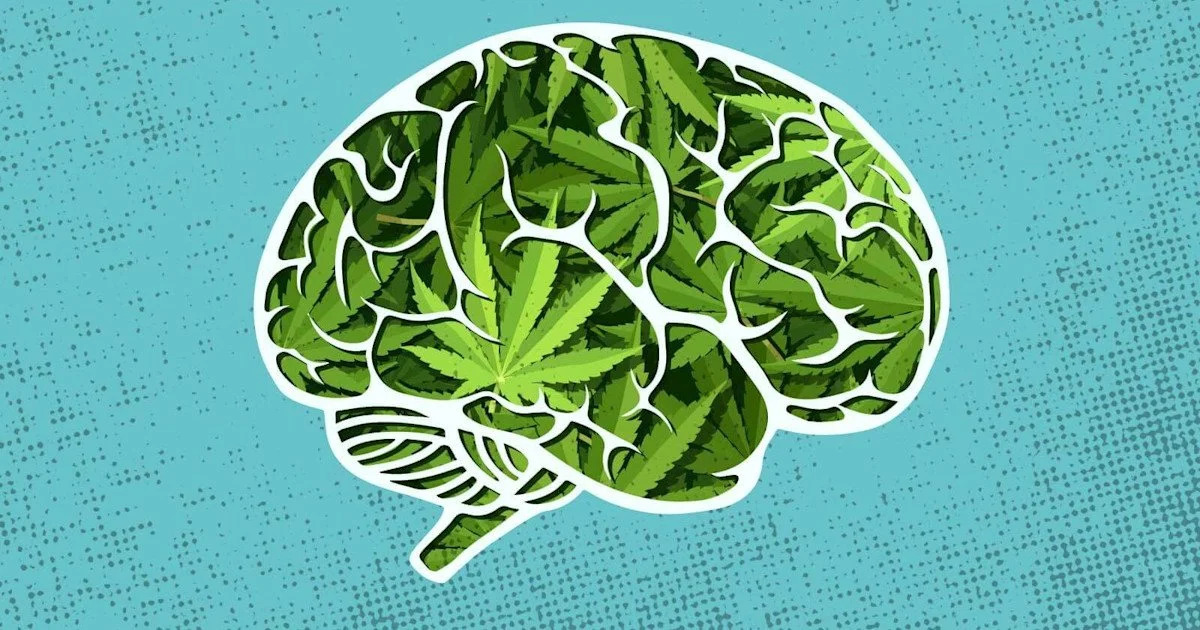
Below Is a FREE TO DOWNLOAD short audio about the impact cannabis has on the brain.
What is science learning about cannabis and it's effect on the brain?
Written by Casper Leitch
For decades, the conversation around cannabis has been shaped by extremes. On one side, you had the old “Reefer Madness” warnings that insisted a single puff would ruin your life. On the other, you had people who treated cannabis like a harmless herbal tea.
But now, the science is finally catching up to the reality of how people actually use cannabis, and what it really does to the brain. And the picture that’s emerging is far more interesting (and far more nuanced) than either side ever imagined.
One of the biggest changes driving this new understanding is potency. The cannabis of the 1970s and 80s was mild compared to what’s on the market today. Back then, THC levels hovered around two to five percent. Today, it’s common to see flower above twenty percent, and concentrated products like waxes, oils, and dabs can reach seventy, eighty, even ninety percent THC. That means the brain is being exposed to levels of THC that earlier generations never came close to experiencing. And when you change the dose that dramatically, you change the effects.
Researchers are now seeing that high‑potency cannabis can create stronger dopamine surges, more intense sensory shifts, and more dramatic changes in short‑term memory. These effects are especially noticeable in younger people whose brains are still wiring themselves together. Some studies show that heavy use of high‑potency products can alter the way certain brain regions communicate with each other. It doesn’t mean everyone who uses cannabis will experience these changes, but it does mean the dose matters, and it matters a lot more than we used to think.
But here’s where the story gets more complicated. While high‑potency cannabis raises concerns, other research is challenging some of the old fears about cannabis and adult cognition. A major study published in 2024 followed middle‑aged and older adults who used cannabis moderately; not every day, and not the strongest products, and found no major decline in memory, learning, or problem‑solving after a year. In fact, some researchers argue that the adult brain is far more resilient to cannabis than people assume.
One psychologist at Columbia University ran a study where adults smoked cannabis and then took a math test. They were told they would be given a cash reward if they did better than eighty-five percent correct on the test. They didn’t want to smoke before the test because they wanted to earn the money offered for doing well. But when they did, their accuracy barely changed. They were slower and they felt less confident, but their actual performance stayed almost the same.
That doesn’t mean cannabis has no effect, it clearly does, but it suggests that moderate adult use may not be the cognitive disaster some early studies claimed. Where the science becomes more concerning is with teenagers. Study after study shows that the adolescent brain is uniquely vulnerable. During the teen years, the brain is pruning old connections and strengthening new ones. It’s a period of intense rewiring, and THC interacts directly with the systems involved in motivation, emotional regulation, and memory.
A massive study following nearly half a million teens found that those who used cannabis were twice as likely to develop psychotic or bipolar disorders by their mid‑twenties. That doesn’t mean cannabis causes these conditions directly, but the association is strong enough that scientists are urging caution.
Animal studies add another layer to the story. When adolescent animals are exposed to daily THC, researchers see inflammation in key emotional‑regulation areas of the brain; inflammation that doesn’t appear in adult animals under the same conditions.
And while the idea of cannabis lowering IQ has been debated for years, some research still suggests that heavy use before age sixteen may lead to small but measurable declines in certain cognitive skills. Again, none of this proves a direct cause. But the patterns are consistent enough that the scientific community is taking them seriously.
Another area of research that’s getting attention is the idea of a “cognitive rebound.” Many long‑time users talk about taking tolerance breaks; stepping away from cannabis for a few weeks to reset their system. Studies now show that some of the attention and working‑memory issues seen in heavy users can improve after a period of abstinence. Brain‑imaging research even suggests that certain connectivity patterns begin to normalize when people stop using cannabis for a while. That doesn’t mean everything snaps back to baseline, and it doesn’t mean everyone recovers the same way. But it does suggest the brain has a remarkable ability to heal, especially in adults.
On the opposite end of the age spectrum, scientists are exploring whether certain cannabinoids might actually protect the aging brain. A 2024 study from the Salk Institute focused on CBN: a compound that forms as THC breaks down over time. In lab models, CBN helped protect neurons by stabilizing mitochondria, the tiny power plants inside our cells. When mitochondria fail, neurons die, and that process is linked to Alzheimer’s and Parkinson’s disease.
The idea that cannabinoids might slow some of this damage is exciting, but it’s still early. These are lab studies, not clinical trials. No one should assume cannabis prevents dementia. But the possibility that certain cannabinoids could support brain health in older adults is now on the scientific radar in a serious way.
One of the most interesting findings from recent research has nothing to do with biology at all - it’s about behavior. A long‑term study of young cannabis users in Los Angeles found that the people who avoided negative outcomes weren’t necessarily the ones who used the least. They were the ones who set boundaries. They didn’t use before work or school. They didn’t drive while high. They didn’t use cannabis to escape every uncomfortable feeling. They treated it the way many people treat alcohol: something to be used intentionally, not constantly. Those who followed these self‑imposed rules were far less likely to develop cannabis use disorder, even if they used regularly. It suggests that moderation isn’t just about quantity; it’s about context, mindset, and purpose.
So what does all this mean for the average person trying to make sense of cannabis today? It means the conversation has finally matured. We’re moving past the old stereotypes; the lazy stoner on one side, the miracle‑cure evangelist on the other. We’re beginning to understand that cannabis is a powerful substance with real effects, both positive and negative, depending on who’s using it, how often, how young they start, and how strong the product is. It means adults who use moderately need not panic about their brain health.
It means teenagers should be approached with honesty, not scare tactics. It means older adults might one day benefit from cannabinoids designed specifically for neuro-protection. And it means that as legalization spreads, education has to keep up; not from cannabis companies, but from public‑health experts who can explain potency, dosing, and risks in a clear, balanced way.
Cannabis is here to stay. The question now is how we use it wisely. And the more we learn about the brain, the more it becomes clear that wisdom - not fear, not hype - is exactly what this moment calls for.